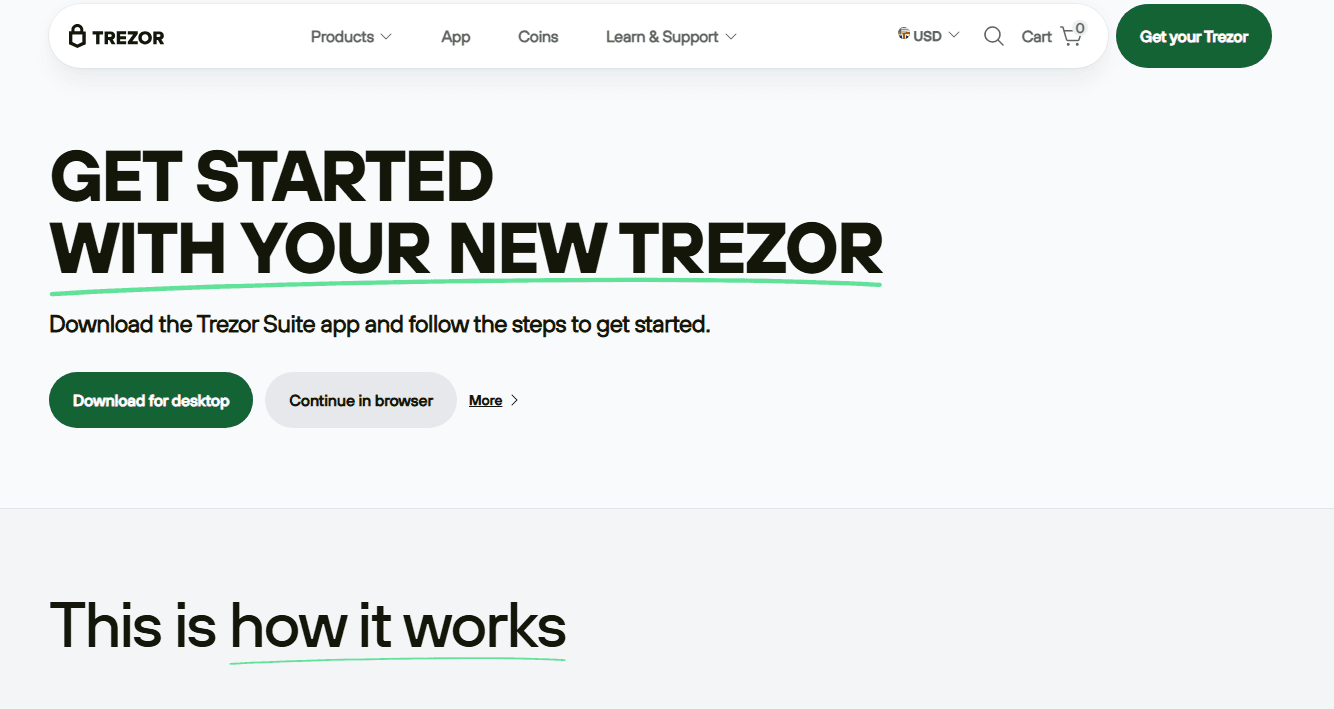
Trezor.io/Start: Secure Step-by-Step Guide to Setting Up Your Trezor Wallet
As cryptocurrencies continue to gain global adoption, the importance of protecting digital assets has never been greater. Online wallets and exchanges offer convenience, but they are also frequent targets of cyberattacks. Hardware wallets provide a stronger level of protection by keeping private keys offline. Trezor.io/Start is the official onboarding platform designed to help users set up their Trezor hardware wallet correctly and securely from the very beginning.
This guide explains the purpose of Trezor.io/Start, how the setup process works, and how users can safely manage their crypto assets after configuration.
What Is Trezor.io/Start?
Trezor.io/Start is the official setup and initialization process for Trezor hardware wallets. It walks users through each required step, ensuring the device is configured properly and securely. The platform is designed to reduce setup errors, prevent security mistakes, and educate users about safe cryptocurrency storage practices.
Whether you are creating a new wallet or restoring an existing one, Trezor.io/Start ensures that private keys are generated and handled in a secure offline environment.
Why Choose a Trezor Hardware Wallet?
A Trezor hardware wallet is built specifically to protect private keys from online threats. Unlike software wallets that run on internet-connected devices, Trezor stores sensitive information inside the hardware itself.
Key benefits of using a Trezor wallet include:
Offline storage of private keys
Full control and ownership of funds
Strong protection against malware and phishing
Support for many cryptocurrencies
Transparent and security-focused design
Using Trezor.io/Start ensures these benefits are properly activated during setup.
Preparing Before You Begin
Before starting the setup process, it is important to prepare properly. This helps ensure a smooth experience and reduces security risks.
Recommended preparations include:
Using a personal and trusted computer or mobile device
Ensuring a stable internet connection
Choosing a private, distraction-free environment
Having pen and paper ready to write down the recovery phrase
Careful preparation is a key part of responsible crypto security.
Connecting the Trezor Device
Once preparation is complete, the Trezor hardware wallet is connected to your device. Trezor.io/Start detects the connected wallet and begins guiding you through the setup steps.
At this stage, the Trezor device screen plays a crucial role. Important information and confirmations appear directly on the device, allowing you to verify actions physically rather than trusting only what appears on a computer screen.
Installing the Wallet Interface
To interact with the Trezor device, users must install the official wallet interface. This interface allows users to manage accounts, view balances, and initiate transactions.
The wallet interface does not store private keys. Instead, it communicates with the Trezor device, which signs transactions internally. This separation ensures sensitive information never leaves the hardware wallet.
Creating a New Wallet
For new users, Trezor.io/Start guides the creation of a new wallet. During this process, the device generates private keys internally while remaining offline.
After key generation, the device displays a recovery phrase. This phrase is the only backup to access the wallet and must be recorded carefully.
The setup process ensures:
Private keys are never exposed online
The recovery phrase is shown only on the device
The user maintains complete control
Understanding the Recovery Phrase
The recovery phrase is the most important security element of a Trezor wallet. It allows users to restore access to their funds if the device is lost, damaged, or replaced.
Essential recovery phrase safety rules include:
Write it down clearly on paper
Store it in a secure offline location
Never take photos or save it digitally
Never share it with anyone
Anyone with access to the recovery phrase can control the wallet, making its protection critical.
Restoring an Existing Wallet
Trezor.io/Start also supports restoring an existing wallet using a recovery phrase. This option is useful when replacing a device or recovering access after a reset.
The restoration process involves:
Choosing the restore option
Entering the recovery phrase securely on the device
Rebuilding wallet accounts automatically
This process ensures continuity without compromising security.
Setting Up a PIN Code
After creating or restoring a wallet, users are prompted to set up a PIN code. The PIN adds a layer of physical security to the device.
A strong PIN:
Prevents unauthorized use if the device is lost
Is required every time the device is connected
Works alongside the recovery phrase for protection
Trezor.io/Start guides users through selecting and confirming a secure PIN.
Managing Cryptocurrency Accounts
Once setup is complete, users can begin managing cryptocurrency accounts. Each supported cryptocurrency can be added as a separate account within the wallet interface.
Account management features include:
Viewing balances and transaction history
Sending and receiving cryptocurrency
Managing multiple assets from one dashboard
Confirming transactions directly on the device
Every transaction must be physically approved on the Trezor device, ensuring full user control.
Transaction Verification and Security
One of the strongest security features of Trezor wallets is on-device transaction verification. Before any transaction is finalized, details such as the recipient address and amount are displayed on the device screen.
This protects users from:
Address-replacement malware
Unauthorized transfers
Accidental mistakes
Trezor.io/Start emphasizes verifying all transaction details carefully.
Firmware Updates and Ongoing Maintenance
Firmware updates are essential for maintaining wallet security and functionality. Trezor.io/Start explains how to safely update device firmware when updates are released.
Before updating, users should:
Confirm the recovery phrase is safely stored
Use a trusted computer or device
Follow on-screen instructions carefully
Regular updates help protect against newly discovered vulnerabilities.
Best Practices for Long-Term Security
Security does not end after setup. Trezor.io/Start educates users on maintaining strong security habits over time.
Best practices include:
Never entering the recovery phrase on websites or apps
Keeping firmware and software updated
Avoiding shared or public computers
Storing the device and recovery phrase separately
Remaining alert to phishing attempts
Consistent security habits are essential for protecting digital assets.
Who Should Use Trezor.io/Start?
Trezor.io/Start is ideal for:
Beginners learning secure crypto storage
Long-term investors prioritizing safety
Users transitioning from online wallets
Anyone who values privacy and self-custody
The guided setup process makes hardware wallet security accessible to users of all experience levels.
Conclusion
Trezor.io/Start is the foundation of a secure cryptocurrency storage experience. By following the official setup process, users can safely initialize their Trezor hardware wallet, protect their recovery phrase, and gain full control over their digital assets.
With offline key generation, physical transaction confirmation, and a strong emphasis on user education, Trezor.io/Start provides peace of mind in an increasingly digital financial world. Proper setup and responsible use ensure long-term protection of cryptocurrency holdings.